Plastic bottle pollution in Bangladesh: where billions of bottles end up
Bangladesh uses more than three billion single-use plastic bottles a year and recycles about a fifth of them. Where the rest go, how they come back to us, and what helps.
The short answer
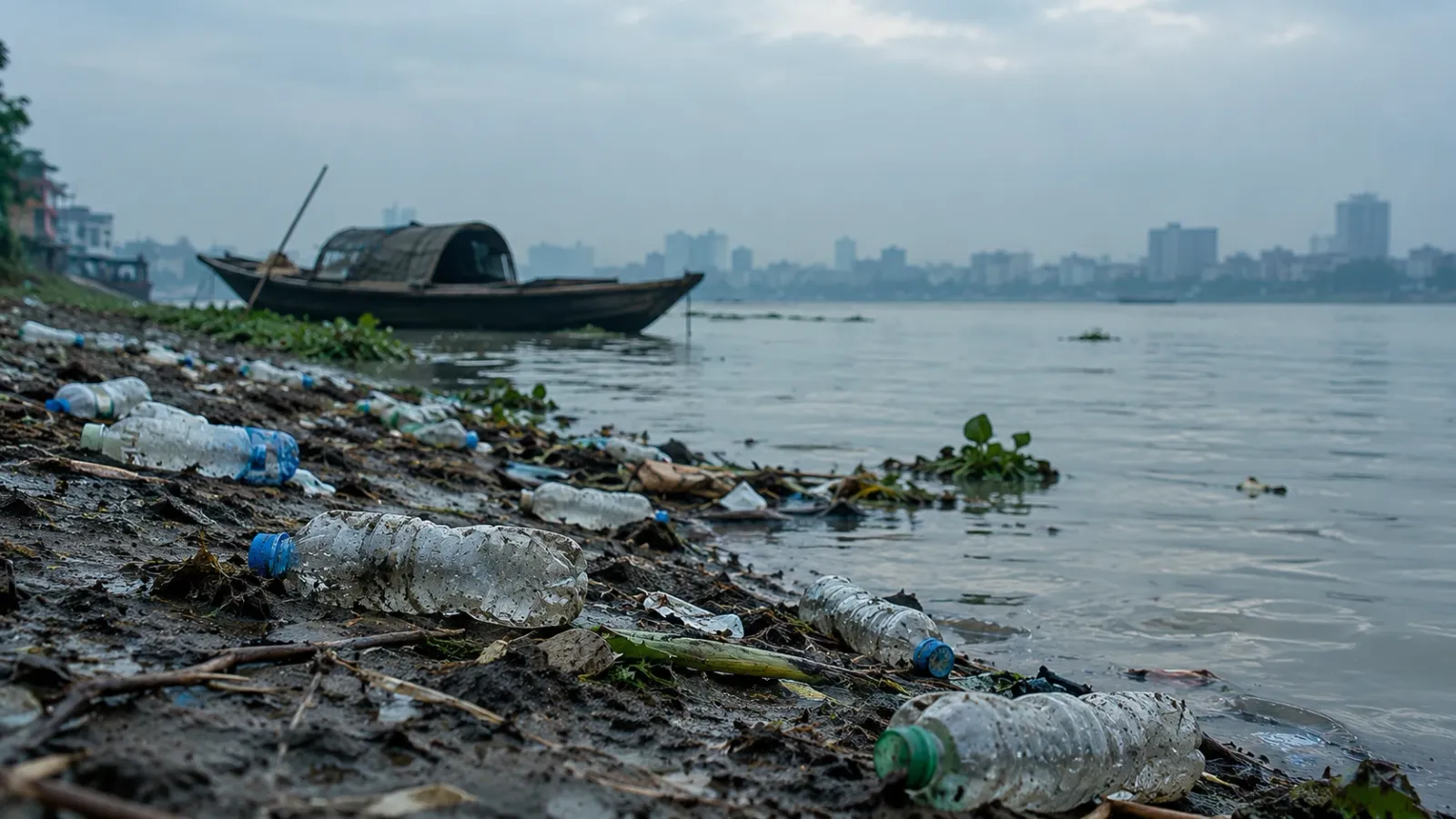
Bangladesh uses an estimated 3.15 to 3.84 billion single-use plastic bottles a year, and only 21.4% are recycled, according to a 2024 ESDO survey. The other 78.6% end up in rivers, the sea and landfills, where a bottle can last for centuries, breaking into microplastics that return in our water and food.
Buy a bottle of water at a bus stand, drink it in five minutes, drop it in a bin or by the road. Multiply that by a country of around 170 million people, and the numbers become hard to picture. Bangladesh now uses between 3.15 and 3.84 billion single-use plastic bottles a year[1,2]: roughly 9 to 10 million bottles every day.
This guide sets out what the most recent research found, where those bottles go after we are done with them, how they find their way back into our water, and the simple changes that cut the number we use.
What the 2024 survey found
The Environment and Social Development Organization (ESDO) surveyed 3,416 consumers, 288 retailers and 180 waste pickers in urban and rural areas across all eight divisions between April and August 2024[1]. Of the billions of single-use bottles the country uses each year, only 21.4% are recycled. The other 78.6% end up polluting rivers, the sea and landfills.
The same survey found how deeply the habit runs, and how little the risks are understood:
- 83.6% of respondents regularly use disposable plastic bottles. In cities they are mostly water bottles; in rural areas, mostly soft drinks[1].
- 51% of urban and 42% of rural consumers throw a bottle away after a single use. The rest reuse it a few times first.
- Only 18.4% of urban and 5.5% of rural respondents recognised the potential health risks[1,2].
- Only 3.4% of the waste pickers, the people who collect most of the bottles that do get recycled, were aware of their environmental impact.
Where the bottles go
Bottles are part of a much larger plastic problem. The World Bank found that plastic use in Bangladesh’s cities tripled in 15 years, from 3 kg per person in 2005 to 9 kg in 2020, and that Dhaka’s, at 22.25 kg per person a year, is more than three times the national urban average[3]. Of the 977,000 tonnes of plastic used in 2020, only 31% was recycled. A large part of the rest is dumped in landfills, water bodies and rivers.
A plastic bottle does not rot. Researchers behind the ESDO study say one can persist in the environment for up to 450 years[1]. It does not vanish in that time; sun, heat and water break it into smaller and smaller pieces, releasing microplastics and chemicals into the soil, the water and the food chain.
How the plastic comes back to us
What we throw away does not stay away. Dhaka sits on rivers, and its rivers carry what the city discards. A 2025 study of the Buriganga and the Turag found heavy microplastic pollution in both, with the Buriganga far worse.
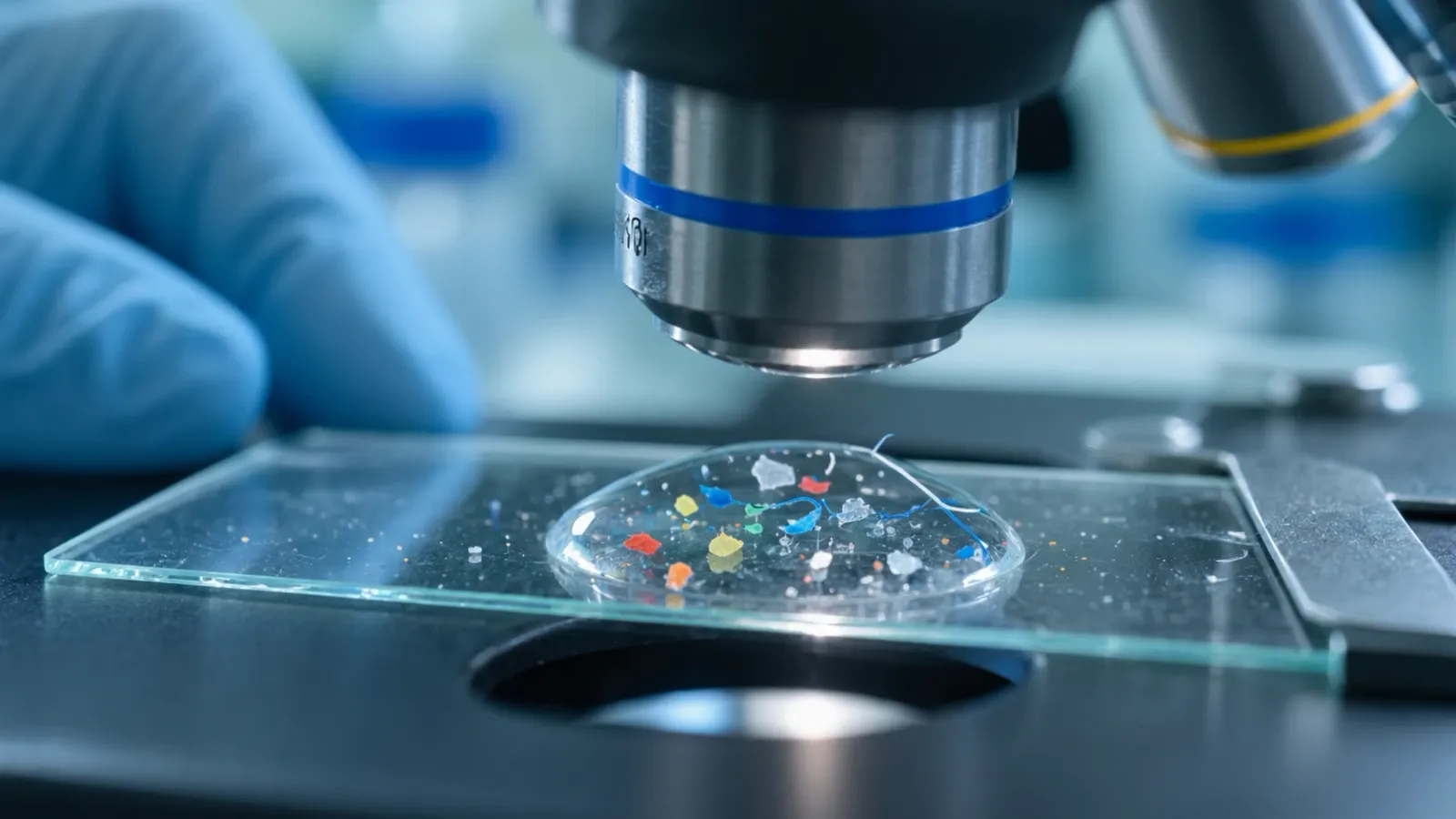
In the dry season, the Buriganga’s water held between about 27 and 375 microplastic particles per litre[4]. Most were fragments, films and fibres smaller than 0.3 mm, chiefly polyethylene and polypropylene, two of the most common plastics in packaging. The researchers also found toxic metals, including cadmium and lead, on the surface of the particles.
From rivers and the ground, plastic reaches what we drink. A 2024 study found microplastics in every sample of supplied tap water tested in four major Bangladeshi cities, at an average of 35.33 particles per litre[5]. Bottled water is no escape: all 10 bottled-water brands tested in Bangladesh contained microplastics, at about 35 particles per litre on average[6]. And a 2024 study in the United States, using a newer laser technique able to see far smaller particles, counted around 240,000 pieces of plastic in a single litre of bottled water, most of them nanoplastics[7].
Scientists have now found those particles inside the human body, in blood, artery plaque, brain tissue and semen. What each study found is set out in our guide to microplastics in the human body.
What helps
ESDO’s recommendations start with using fewer single-use bottles, then improving recycling, supporting waste pickers and enforcing stricter policy[1]. Policy can work here: in 2002, Bangladesh became the first country in the world to ban plastic shopping bags[3]. Until the rules catch up with bottles, each of us can cut the number we use.
- Carry a reusable bottle. One bottle refilled every day replaces hundreds of single-use bottles a year.
- Refill from taps and fountains, treated. Tap water needs one more step before you drink it. Our guide to Dhaka tap water explains why, and boiling vs a filter bottle vs bottled water compares the options and their cost per litre.
- At home, buy water in bulk or boil it. A large refillable jar or boiled tap water uses far less plastic than a stream of small bottles.
- When you do use a bottle, put it where it can be collected. A bottle in a bin or handed to a collector can be recycled; one dropped in a drain ends up in a river.
The bottom line
Bangladesh uses billions of single-use plastic bottles a year and recycles about one in five. The rest stay in our rivers, land and sea for centuries, breaking into microplastics that return in the water we drink, bottled water included. Better recycling and stronger rules will take time. Carrying one bottle and refilling it is something anyone can start tomorrow.
Questions people ask
How many plastic bottles does Bangladesh use a year?
Between 3.15 and 3.84 billion single-use plastic bottles a year, according to a 2024 survey by the Environment and Social Development Organization (ESDO). That is roughly 9 to 10 million bottles every day.
How many plastic bottles are recycled in Bangladesh?
Only 21.4%, according to the same ESDO survey. The remaining 78.6% end up polluting rivers, the sea and landfills. Across all plastic, the World Bank found that 31% of the 977,000 tonnes used in 2020 was recycled.
How long does a plastic bottle last in the environment?
Researchers behind the ESDO study say a single-use bottle can persist for up to 450 years. It does not disappear in that time; it breaks into smaller and smaller pieces, the microplastics now found in rivers, tap water and food.
Is bottled water free of microplastics?
No. A study of 10 bottled-water brands sold in Bangladesh found microplastics in every one, at about 35 particles per litre on average. A 2024 US study using a newer method counted around 240,000 plastic particles per litre, mostly nanoplastics.
How can I use fewer plastic bottles?
Carry a reusable bottle and refill it. A filter bottle like Hydra lets you refill from taps, fountains and flowing water; it removes 99% of bacteria and parasites, a claim certified by BUET’s BRTC. It does not remove viruses, arsenic or salt, so it is not for tube-well water or seawater.
Sources
- Hossain S, The Business Standard (2024). Bangladesh disposes around 3.5b single-use plastic bottles annually: Study (ESDO survey of 3,416 consumers, 288 retailers and 180 waste pickers). The Business Standard.
- The Financial Express (2024). BD uses 3.84b plastic bottles a yr: Study (ESDO, Environmental Impact of Single-Use Plastic Bottles: Pollution and Health Risks). The Financial Express.
- World Bank (2021). Meeting Bangladesh’s plastic challenge through a multisectoral approach (Towards a Multisectoral Action Plan for Sustainable Plastic Management in Bangladesh). World Bank.
- Mahmud F, Roy H, Bhuiyan MMK, Islam S (2025). Critical analysis, characterization, and treatment of microplastics in the peripheral rivers of Dhaka city: Buriganga and Turag. Environmental Science: Advances 4:1810–1833.
- Hossain MB, Yu J, Sarker PK, et al. (2024). Microplastic accumulation, morpho-polymer characterization, and dietary exposure in urban tap water of a developing nation. Frontiers in Sustainable Food Systems 8.
- Hossain MB, Yu J, Banik P, et al. (2023). First evidence of microplastics and their characterization in bottled drinking water from a developing country. Frontiers in Environmental Science 11.
- Qian N, Gao X, Lang X, et al. (2024). Rapid single-particle chemical imaging of nanoplastics by SRS microscopy. Proceedings of the National Academy of Sciences 121(3).
Written by Nawfel Ahamad, a chemical engineering graduate of BUET and co-founder of Hydra. This guide is general information, not medical advice. If you are unsure about a water source, ask a health professional or ask us before you drink from it.