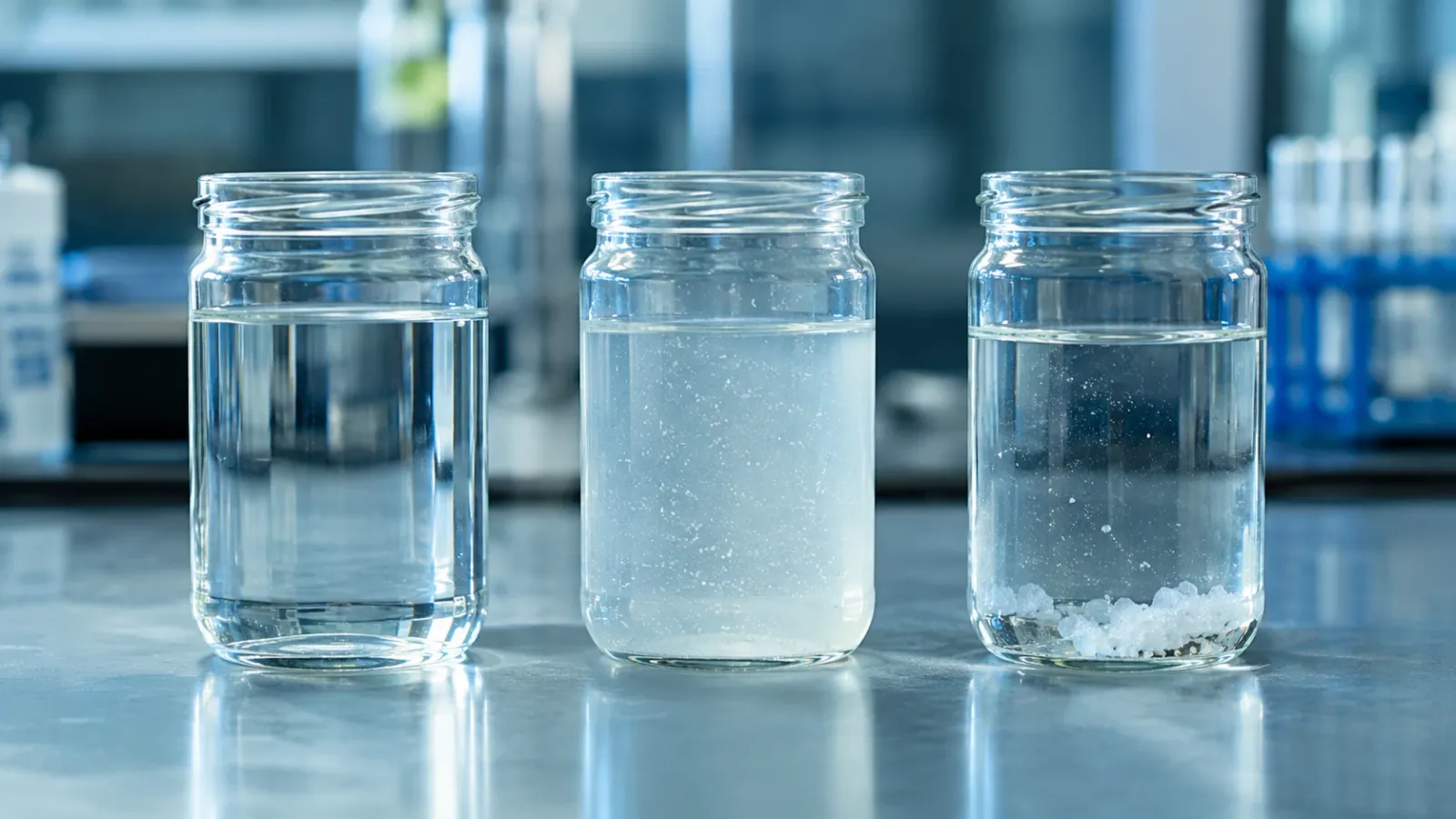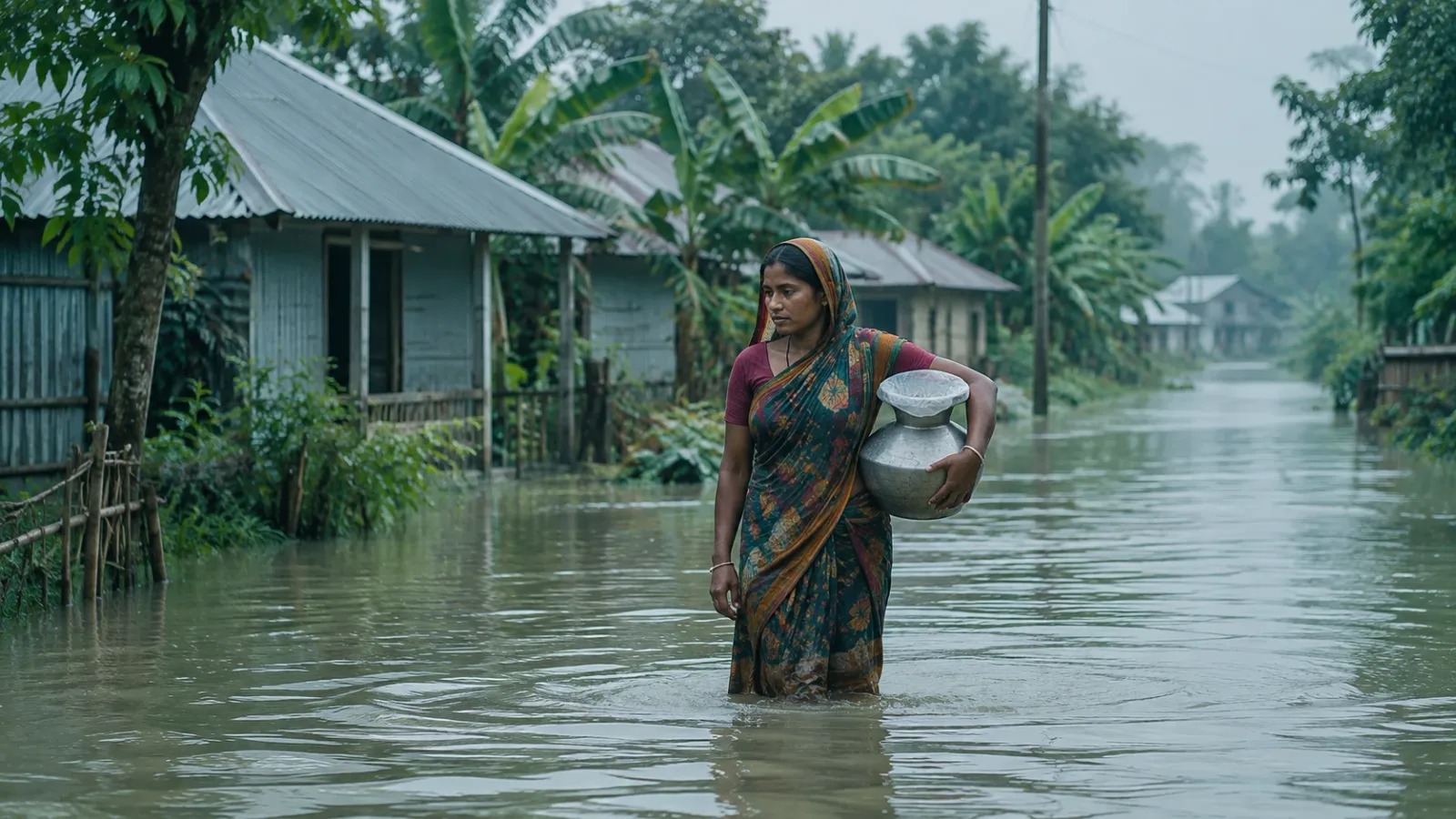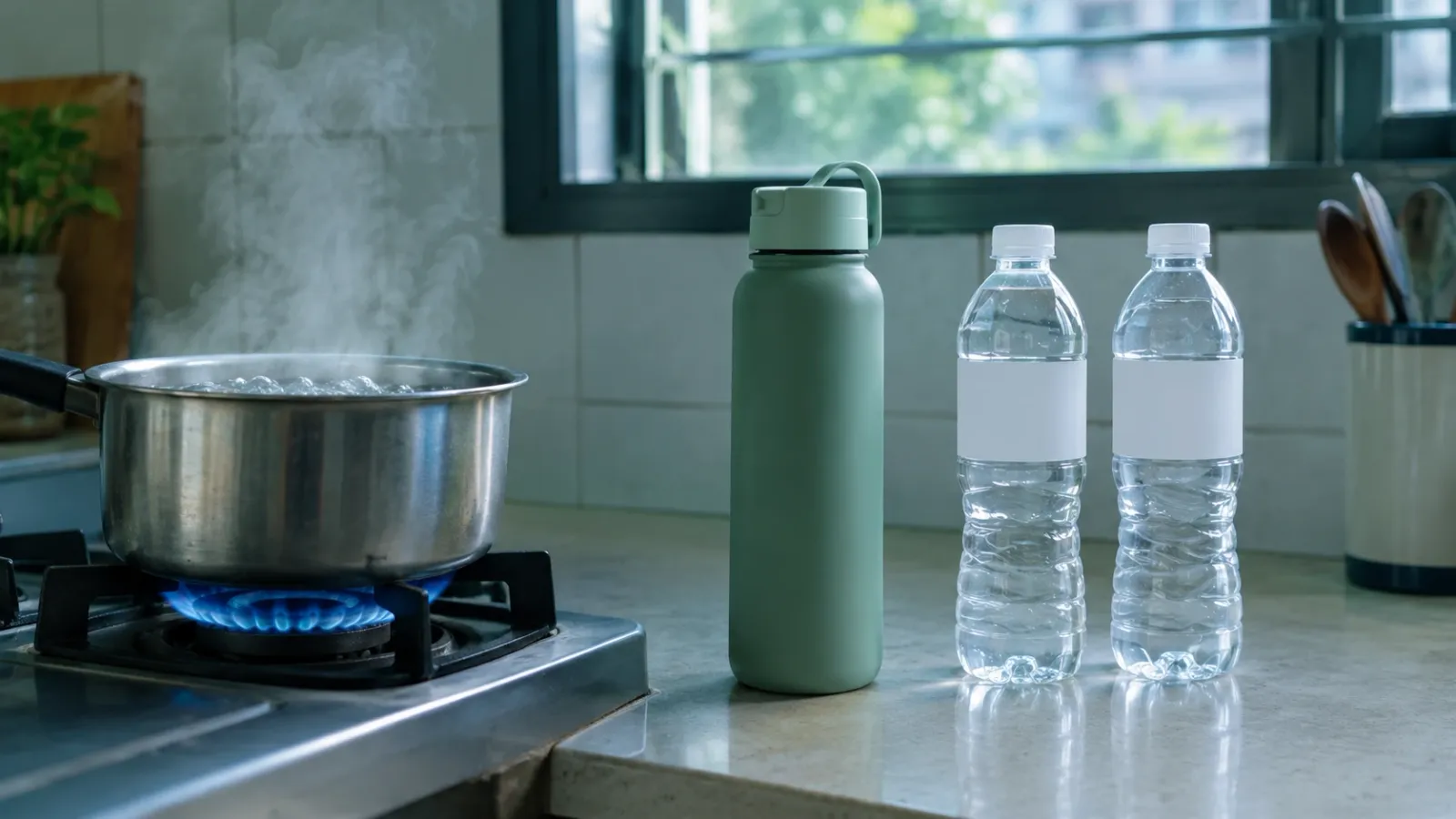
Is Dhaka tap water safe to drink?
What independent tests of WASA water have found, where the contamination comes from, and how to make tap water safer at home and on the go.
The short answer
Not reliably, straight from the tap. Dhaka WASA says its water is safe where it leaves treatment, but independent tests have repeatedly found coliform and E. coli bacteria in household taps and pipelines. Most contamination happens after treatment, in pipes, tanks and storage. Treat tap water before you drink it.
Ask anyone in Dhaka whether they drink straight from the tap and most will say no. They are right to be cautious. The water leaving Dhaka WASA’s treatment plants is generally reported as safe[1], but by the time it reaches a kitchen tap it has travelled through kilometres of ageing pipe, sat in rooftop and underground tanks, and often been poured into a jug or bottle. Each of those steps is a chance for it to pick up bacteria.
This guide brings together what independent tests have actually found, explains where contamination comes from, and sets out the practical ways to make tap water safer to drink.
What tests of Dhaka’s tap water have found
There is no single, recent, city-wide survey of what comes out of Dhaka’s taps. What exists is a series of studies and official tests that point the same way: water is cleaner at the source than at the point of use.
| Study | What was tested | What was found |
|---|---|---|
| Mahbub et al., 2011[2] | 45 samples: 29 house taps, 5 street pipeline taps, 11 WASA source pumps | 51% positive for E. coli and 58% for coliform bacteria. 62% of house-tap samples exceeded the bacterial limit, against 45% at the pumps. |
| Government-commissioned tests, 2019[3] | 34 samples tested by BUET, Dhaka University and icddr,b across WASA’s 10 zones and four source points | 8 samples contaminated. Coliform bacteria found in zones 1, 4 and 7. |
| Lancaster University and Dhaka University, 2017[4] | 480 samples from WASA’s last delivery points and from stored household water in four slum areas | 99% of water collected after the last delivery point had faecal contamination; far less was found at the delivery point itself. |
Results vary by sampling point and method, and some studies are older. All are linked in the sources at the end.
The pattern across these studies matters more than any single number. In the 2011 study, house taps and roadside taps were more contaminated than the WASA source pumps[2], which led the authors to point at the distribution lines. The 2017 study found the same thing one step later: water was much cleaner where it left the supply than after people had collected and stored it[4].
Why water gets dirty after it has been treated
Treated water can pick up bacteria in three places on its way to you.
- The pipes. Old or leaking pipes laid close to drains and sewers can let contaminated water in, especially when supply is intermittent and pressure drops. The 2022 Daily Star editorial on WASA’s own source testing made exactly this point: water that is safe at the plant means little if the lines leak[1].
- The tanks. Most buildings store water in rooftop or underground reservoirs. A tank that is not cleaned and covered can grow bacteria and collect dirt.
- Your own storage. A national study of household water found that contamination at the point of use was strongly tied to contamination where the water was collected, and that treating water at home significantly reduced the risk[5]. Jugs, bottles and dispensers that are rarely washed are a common last step for bacteria.
It is not only bacteria
Bacteria are the main reason not to drink untreated tap water, but they are not the only thing in it. A 2024 study of supplied tap water in four major Bangladeshi cities found microplastics in every sample, at an average of 35.33 particles per litre, mostly tiny fibres[6]. The authors judged the treatment process inadequate for removing them. Why that matters is covered in our guide to microplastics in the human body.
How to make tap water safer to drink
None of this means tap water is unusable. It means it needs one more step before you drink it.
At home
- Boil it properly. Bringing water to a rolling boil kills bacteria, viruses and parasites[7]. Let it cool in the same covered pot, or pour it into a clean, covered container; boiled water poured into a dirty jug is contaminated again[8].
- Keep your containers clean. Wash jugs, bottles and dispenser taps regularly, and keep stored water covered.
- Ask about your building’s tank. Find out when the rooftop or underground reservoir was last cleaned.
On the go
Boiling does not travel. At a campus, office or tea stall tap, a filter bottle treats water as you drink it. A good one removes bacteria and parasites, the main risk in tap water, and microplastics too. Our guide to boiling vs a filter bottle vs bottled water compares the cost and what each method does and does not remove.
The bottom line
Dhaka’s tap water starts out treated but often arrives with bacteria picked up along the way. Treat every glass from the tap: boil it at home, filter it when you are out, keep your storage clean, and know the two situations, floods and tube wells, where a filter on its own is not enough.
Questions people ask
Is Dhaka WASA water safe at the treatment plant?
A joint study by Dhaka WASA and icddr,b reported the water as safe at the source, but it did not test taps or the pipes. The problem is what happens between the plant and your glass: independent tests have found bacteria in pipelines, household taps and stored water.
Does boiling make Dhaka tap water safe?
Boiling to a rolling boil kills bacteria, viruses and parasites, which WHO confirms. It does not remove chemicals or microplastics, and boiled water can be contaminated again if it is stored in a dirty jug or bottle.
Can I use a filter bottle with Dhaka tap water?
Yes. Tap water is exactly what Hydra is made for. Its filter removes 99% of bacteria and parasites; that claim is certified by BUET’s BRTC. Microplastic removal was tested in BUET laboratories. It does not remove viruses, so boil water during floods or a boil-water notice.
Where does tap water usually get contaminated?
Studies of Dhaka water point to the distribution network and the home: leaking pipes, rooftop and underground tanks, and water stored in containers. Water measured at the last delivery point was far cleaner than the same water after household collection and storage.
Does a filter bottle remove arsenic from tap water?
No. Hydra does not remove arsenic, viruses or salt. Arsenic is mainly a risk in tube-well groundwater. If you drink from a tube well, use one tested and marked arsenic-safe.
Sources
- The Daily Star (editorial) (2022). No point in WASA water only being safe at source. The Daily Star.
- Mahbub KR, Nahar A, Ahmed MM, Chakraborty A (2011). Quality Analysis of Dhaka WASA Drinking Water: Detection and Biochemical Characterization of the Isolates. Journal of Environmental Science and Natural Resources 4(2):41–49.
- The Daily Star (2019). Harmful bacteria in Wasa water (tests by BUET, Dhaka University and icddr,b for the Local Government Division). The Daily Star.
- The Daily Star (2017). 99pc water used by slum people contains faecal contamination (Lancaster University and Dhaka University study). The Daily Star.
- Hasan MM, Hoque Z, Kabir E, et al. (2022). Differences in levels of E. coli contamination of point of use drinking water in Bangladesh. PLOS ONE 17(5):e0267386.
- Hossain MB, Yu J, Sarker PK, et al. (2024). Microplastic accumulation, morpho-polymer characterization, and dietary exposure in urban tap water of a developing nation. Frontiers in Sustainable Food Systems 8.
- World Health Organization (2015). Boil water: technical brief. WHO.
- US Centers for Disease Control and Prevention (n.d.). Household water treatment. CDC.
- Flanagan SV, Johnston RB, Zheng Y (2012). Arsenic in tube well water in Bangladesh: health and economic impacts and implications for arsenic mitigation. Bulletin of the World Health Organization 90(11):839–846.
Written by Nawfel Ahamad, a chemical engineering graduate of BUET and co-founder of Hydra. This guide is general information, not medical advice. If you are unsure about a water source, ask a health professional or ask us before you drink from it.