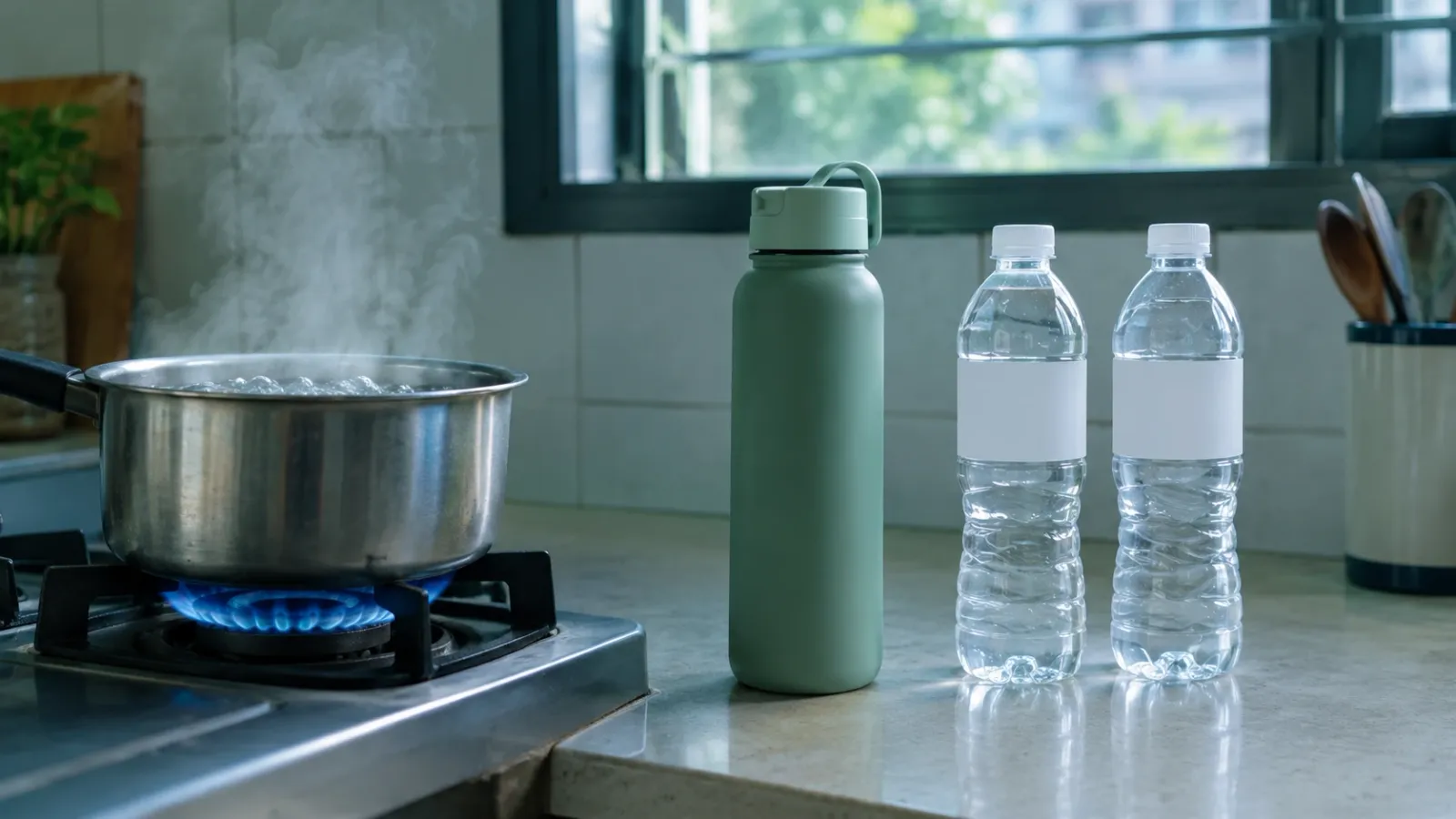
What a filter bottle can and can’t remove: viruses, arsenic and salt explained
Why a filter bottle stops bacteria and parasites but not viruses, arsenic or salt, what a “purifier” does differently, and how to match the method to your water.
The short answer
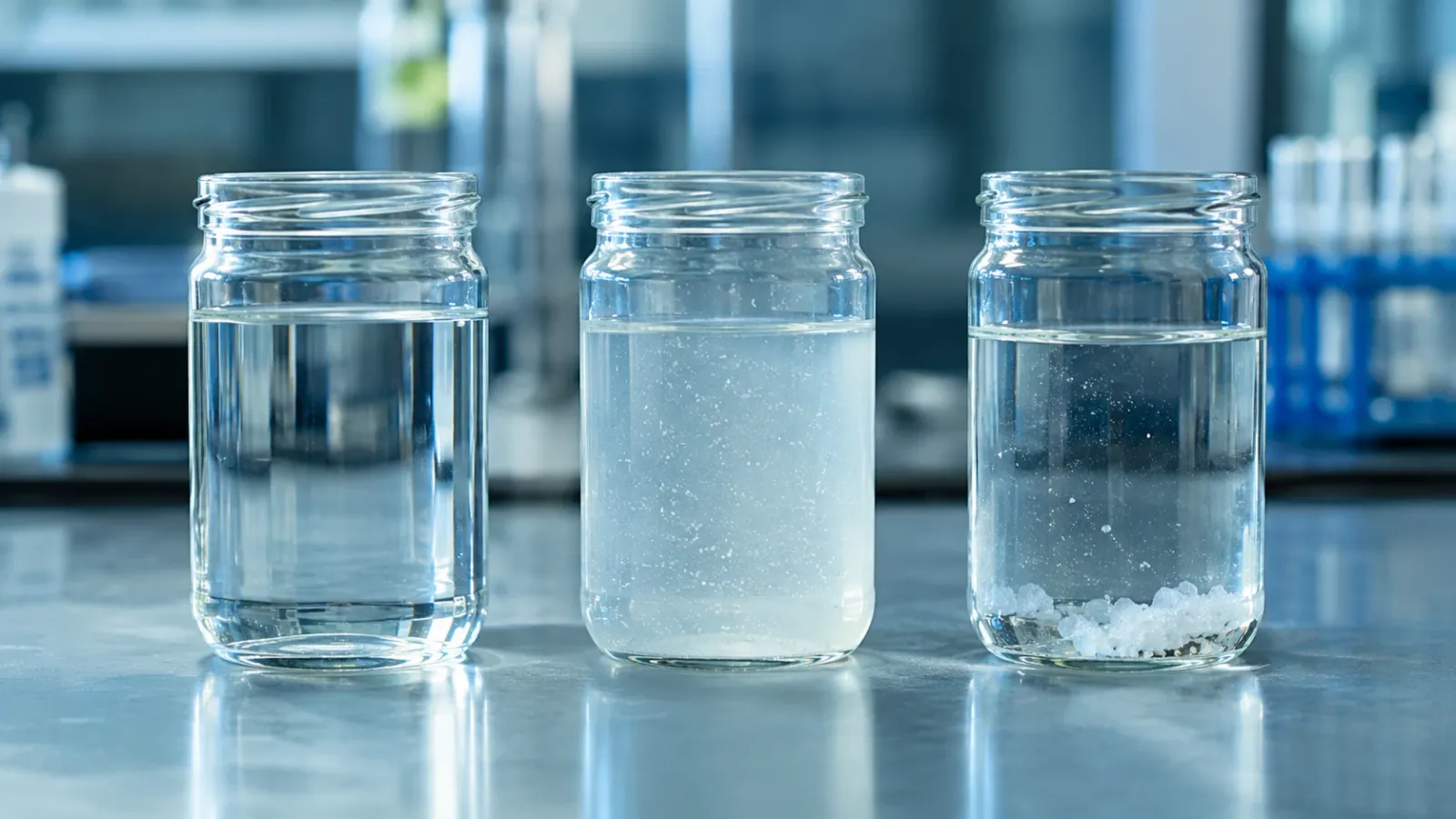
A filter bottle works like a very fine sieve. It traps bacteria, parasites and microplastics, which are bigger than its pores. It cannot stop viruses, which are smaller, or arsenic and salt, which are dissolved in the water. For those you need boiling or chlorine, an arsenic-safe source, or reverse osmosis.
“Does it remove everything?” is the question we are asked most often, and the honest answer is no. No single method makes every kind of water safe. A filter bottle is very good at some jobs and useless at others, and knowing which is which matters more than any brand name on the bottle.
This guide explains what a filter bottle actually does, why it stops some things and not others, and what to use for the water it cannot handle.
How a filter bottle works: a very fine sieve
Most filter bottles, Hydra included, use a microfilter: a membrane full of tiny holes, or pores. Water passes through; anything larger than the pores is held back. It is a physical barrier, with no chemicals and no electricity.
That one fact explains everything a filter bottle can and cannot do. The US Centers for Disease Control and Prevention (CDC) sets out the thresholds plainly: a filter needs pores of 1 micron or smaller to remove parasites, and 0.3 micron or smaller to remove bacteria, and portable filters will not remove viruses[1]. A micron is a thousandth of a millimetre.
What it removes, what it doesn’t, and what to use instead
| Contaminant | Filter bottle (Hydra) | Boiling | What works |
|---|---|---|---|
| Bacteria (E. coli, cholera) | 99% removed (BRTC certified) | Killed[3] | A filter bottle, boiling or chlorine |
| Parasites (Giardia, Cryptosporidium) | 99% removed (BRTC certified) | Killed[3] | A filter bottle or boiling; chlorine is weak against Cryptosporidium[2] |
| Microplastics | 99% removed (BUET lab tested) | Not reliably | A filter |
| Viruses (hepatitis A and E, norovirus, rotavirus) | Not removed | Killed[3] | Boiling, chlorine, or an ultrafilter |
| Arsenic | Not removed | Not removed | An arsenic-safe source, or treatment certified for arsenic |
| Salt (seawater, saline water) | Not removed | Not removed | Reverse osmosis only[2] |
Hydra’s figures are the site’s tested claims; the methods in the last column are CDC and WHO guidance.
Why viruses get through
Viruses are many times smaller than bacteria, small enough to pass through the pores of the microfilters used in portable bottles. The CDC’s guidance for travellers says portable microfilters do not reliably remove gut viruses such as norovirus. Only an ultrafilter, with pores of about 0.01 micron, is fine enough to stop them[2].
Most of the time, in tap water and flowing fresh water, bacteria and parasites are the bigger risk, which is why a filter bottle is useful day to day. Viruses matter most when water may be contaminated with sewage: during floods, after a boil-water notice, or near crowded camps. Then the answer is to boil or disinfect, either instead of filtering or as well as it. Boiling kills bacteria, viruses and parasites alike[3].
Why arsenic gets through
Arsenic is not a particle floating in the water. It is dissolved in it, the way sugar dissolves in tea, so it passes through any sieve however fine. Boiling does not help either: it removes no dissolved chemicals, and as water evaporates what is left becomes slightly more concentrated.
Using a 2009 national survey, researchers estimated that about 20 million people in Bangladesh drank water above the national arsenic limit of 50 micrograms per litre, and about 45 million above the World Health Organization’s guideline of 10[4]. The source was mostly tube wells.
The practical answer in Bangladesh is to drink from a tube well that has been tested and marked arsenic-safe. If you are unsure about a well, do not rely on a filter bottle to make it safe; it will not.
Why salt gets through
Salt is dissolved too. No filter bottle, boiling or chlorine will make seawater or saline water drinkable. The CDC is blunt: only reverse osmosis can desalinate water[2]. At Cox’s Bazar, Saint Martin’s or anywhere in the saline coastal belt, carry fresh water or use a treated supply.
Filter or purifier: what the words mean
You will see bottles sold as “filters” and others as “purifiers”. In general use, a filter removes bacteria and parasites, while a purifier also deals with viruses. Ultrafilters, boiling and chemical disinfection count as purification; a standard microfilter bottle does not. Some products combine the two, and you can too: CDC suggests adding a chemical disinfectant to filtered water to kill any viruses that remain[1].
One more thing no method changes: water can look perfectly clear and still carry germs[5]. Clear is not the same as safe.
Which water a filter bottle is right for
- Yes: tap water, flowing river water, fountains and waterfalls. Bacteria and parasites are the main risk in these, and they are what a filter bottle removes.
- Yes, with boiling or chlorine as well: floodwater, or any source that may carry sewage. See our guide to safe drinking water during floods.
- No: tube-well water where arsenic is possible, and seawater or saline water.
The bottom line
A filter bottle is a sieve. It is excellent at what is bigger than its holes, bacteria, parasites and microplastics, and does nothing about what is smaller or dissolved: viruses, arsenic and salt. Use it for tap and flowing fresh water, boil or disinfect when viruses are a risk, and choose an arsenic-safe source over any filter. Our comparison of boiling, filter bottles and bottled water sets out the cost of each.
Questions people ask
Does a filter bottle remove viruses?
Most do not, Hydra included. Viruses are far smaller than bacteria and pass through the pores of the microfilters used in portable bottles. Only ultrafilters, with pores around 0.01 micrometres, or boiling and chemical disinfection deal with viruses.
Can a filter bottle remove arsenic?
No. Arsenic is dissolved in the water, not floating in it as particles, so it passes through any sieve-like filter. Removing it needs special adsorption media or reverse osmosis. In Bangladesh the practical answer is a tube well tested and marked arsenic-safe.
What is the difference between a water filter and a water purifier?
In general use, a filter removes bacteria and parasites, while a purifier also removes or kills viruses. Boiling, chlorine and ultrafiltration count as purification; a standard microfilter bottle does not. Filtering first and then disinfecting covers both.
Does boiling water remove arsenic or salt?
No. Boiling kills germs but removes no dissolved chemicals. As some water evaporates, arsenic and salt become slightly more concentrated, not less.
Can I drink seawater through a filter bottle?
Never. Salt is dissolved and passes straight through. Only reverse osmosis can turn seawater into drinking water.
Sources
- US Centers for Disease Control and Prevention (n.d.). How to Make Water Safe in an Emergency. CDC.
- US Centers for Disease Control and Prevention (n.d.). Water Disinfection for Travelers (CDC Yellow Book). CDC.
- World Health Organization (2015). Boil water: technical brief. WHO.
- Flanagan SV, Johnston RB, Zheng Y (2012). Arsenic in tube well water in Bangladesh: health and economic impacts and implications for arsenic mitigation. Bulletin of the World Health Organization 90(11):839–846.
- US Centers for Disease Control and Prevention (n.d.). About Water Treatment Options When Hiking, Camping, or Traveling. CDC.
Written by Nawfel Ahamad, a chemical engineering graduate of BUET and co-founder of Hydra. This guide is general information, not medical advice. If you are unsure about a water source, ask a health professional or ask us before you drink from it.