Safe water on the road: a travel guide for Sylhet, Bandarban, Sajek and Cox’s Bazar
Springs, waterfalls, hill streams and the sea: which water you can treat on a trip in Bangladesh, which you cannot, and how to carry less plastic doing it.
The short answer
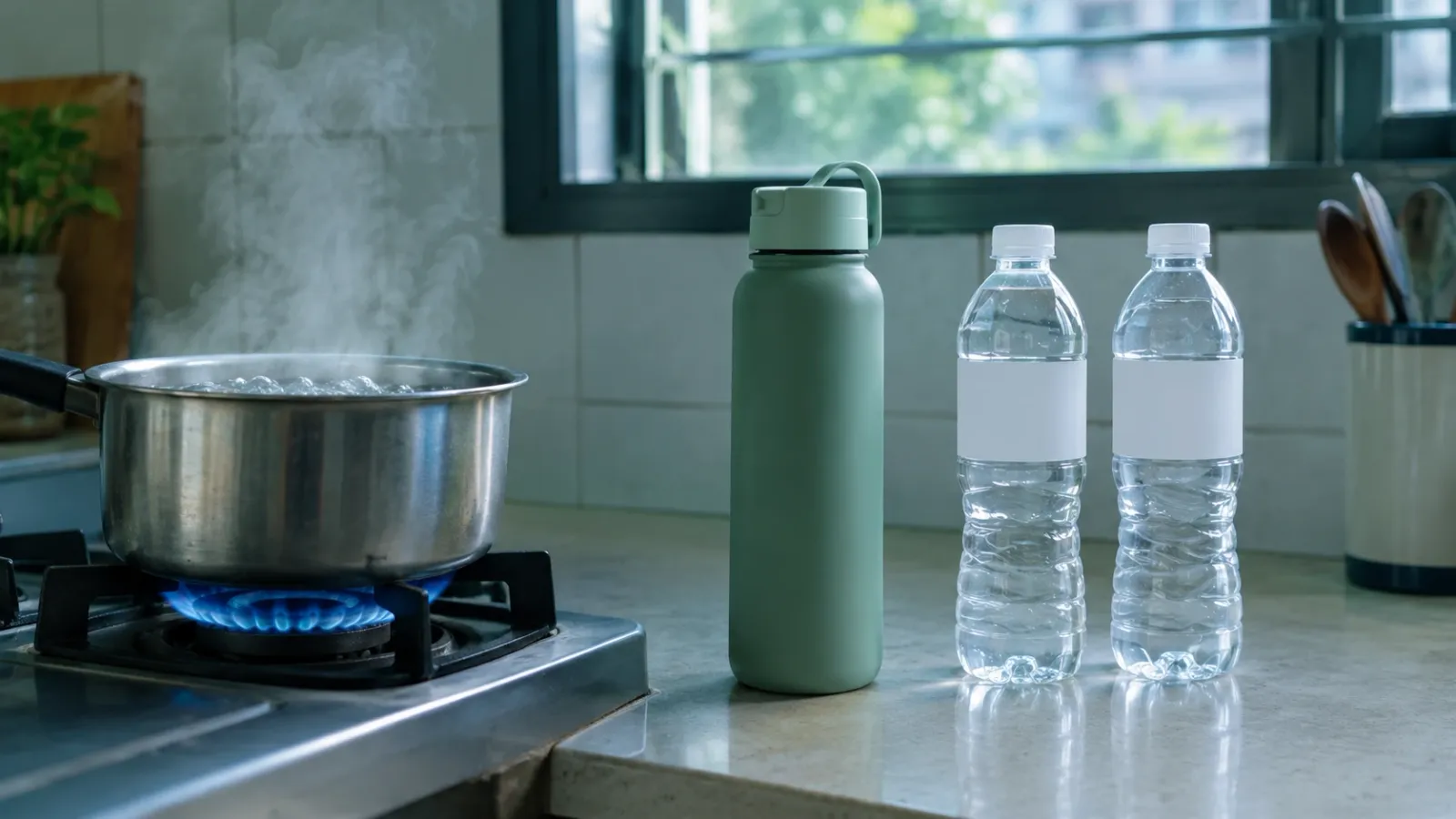
On a trip, never drink untreated water from springs, streams or waterfalls, however clear it looks. A filter bottle makes flowing fresh water safer to drink by removing bacteria and parasites, but not viruses. Never drink seawater, and be careful with tube wells, where arsenic is the risk. Boil or disinfect when in doubt.
A trip in Bangladesh means a lot of different water in a few days: a hotel tap in Sylhet, a stream on the way to Nafakhum, a stored tank at a resort in Sajek, a tube well in a village, and a whole sea at Cox’s Bazar. Some of it you can make safe to drink with a bottle in your bag. Some of it you cannot, whatever you carry.
This guide sorts the water you will meet by what is in it, and what to do about each kind.
The one rule: clear does not mean safe
A cold, clear stream coming down a hill looks like the cleanest water in the country. It may be, or it may carry germs from villages, livestock and campers upstream. Water can look clean and still make you ill[1]. Never drink it untreated.
Four kinds of water, four answers
| Water | Where you’ll find it | Main risk | What to do |
|---|---|---|---|
| Flowing fresh water | Streams, rivers, springs and waterfalls in Sylhet, Bandarban and the hill tracts | Bacteria and parasites | Filter it; boil or disinfect if you suspect sewage upstream |
| Tap and stored water | Hotels, resorts, restaurants, rooftop tanks | Bacteria picked up in pipes and tanks | Filter or boil it |
| Tube-well water | Villages and roadside pumps | Arsenic, in many areas | Use only wells marked arsenic-safe; a filter does not help |
| Seawater | Cox’s Bazar, Saint Martin’s, Kuakata | Salt | Never drink it; carry fresh water |
Hills and waterfalls: Sylhet and Bandarban
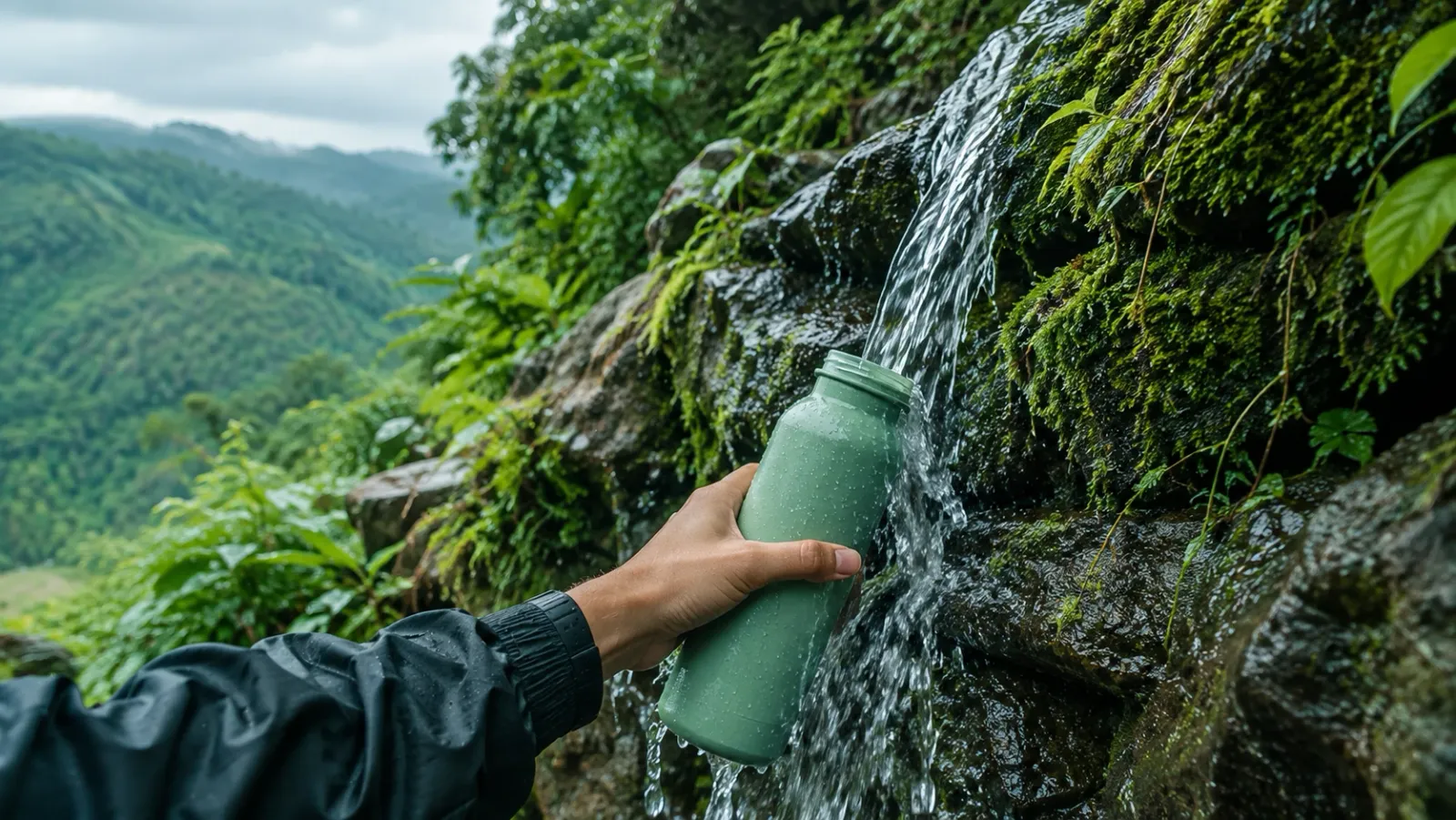
Flowing fresh water is where a filter bottle is at its best. On a trek to a waterfall, along a jhiri or beside a hill river, you can refill from the stream instead of carrying litres of bottled water. A filter with small enough pores removes the bacteria and parasites that are the main risk in stream water[1]. Hydra removes 99% of both; that claim is certified by BUET’s BRTC.
- Fill from moving water, above where people wash, bathe or water animals, never from a still pool.
- Avoid water just after heavy rain, when run-off washes more dirt and waste into streams.
- Below a village or a busy camp, where sewage may reach the water, boil or disinfect as well: filter bottles do not remove viruses[2].
Hilltop stays: Sajek and the resorts
Up on a ridge, the streams are far below and most water is stored: in tanks, drums or jars. Treat stored water like tap water. Germs get into tanks and pipes, so filter or boil it before drinking, and do not assume a resort’s jug has been treated unless you are told it has.
Villages and roadside pumps: tube wells
Tube-well water can look and taste fine and still carry arsenic, which you cannot see, smell or taste. In 2009 about 20 million people in Bangladesh were estimated to drink water above the national arsenic limit, mostly from tube wells[4]. No filter bottle and no amount of boiling removes arsenic. Drink only from a well tested and marked arsenic-safe, or use another source.
The coast: Cox’s Bazar, Saint Martin’s and Kuakata
Never drink seawater, filtered or not. Salt is dissolved in it and passes through any filter; only reverse osmosis can desalinate water[2]. On the coast, carry fresh water and refill your bottle from treated taps at your hotel. Some groundwater near the coast is salty too, so if well water tastes salty, do not drink it.
When to boil instead
Boiling kills bacteria, viruses and parasites[3], so it is the right choice whenever viruses may be in the water: near crowded camps, after floods, or anywhere you see sewage. On a trip, the simplest routine is a filter bottle for streams and taps, and a stove or tea-stall kettle when you are in doubt.
Pack less plastic
A group trip can get through a lot of plastic bottles, and many end up on trails and beaches. Bottled water is not free of plastic either: every brand tested in Bangladesh contained microplastics[5]. A refillable filter bottle cuts both. Our guide to plastic bottle pollution in Bangladesh explains where those bottles end up.
A quick packing list
- A filter bottle, and a spare filled bottle for long stretches without water.
- Water purification tablets, for water you cannot boil and suspect may carry viruses.
- Oral rehydration salts, for heat and for upset stomachs.
- A small cloth to pre-filter muddy water before you fill up.
The bottom line
On the road, sort water by what is in it. Flowing streams, waterfalls and taps: filter them. Anywhere sewage might reach the water: boil or disinfect too. Tube wells: only arsenic-safe ones. The sea: never. For the full picture of what a filter can and cannot do, see what a filter bottle can and can’t remove.
Questions people ask
Is waterfall or spring water safe to drink in Bangladesh?
Not untreated. Clear, fast-flowing water can still carry bacteria and parasites from people and animals upstream. Filter it, boil it or disinfect it first.
Can I refill a filter bottle from a stream in Bandarban or Sylhet?
Yes, flowing fresh water is what a filter bottle like Hydra is made for. It removes 99% of bacteria and parasites; that claim is certified by BUET’s BRTC. It does not remove viruses, so boil or disinfect water near villages, camps or after heavy rain if you are unsure.
Can I filter seawater at Cox’s Bazar or Saint Martin’s?
No. No filter bottle removes salt. Seawater needs reverse osmosis, so carry fresh water or refill from a treated source.
Is tube-well water safe on a trip?
It depends on the well. The hidden risk in many areas is arsenic, which no filter bottle removes. Drink only from wells tested and marked arsenic-safe, or use another source.
How much water should I carry on a hill trek?
Carry enough to reach the next known water source, plus a reserve. With a filter bottle you can carry less and refill along the way, as long as there is flowing fresh water on the route.
Sources
- US Centers for Disease Control and Prevention (n.d.). About Water Treatment Options When Hiking, Camping, or Traveling. CDC.
- US Centers for Disease Control and Prevention (n.d.). Water Disinfection for Travelers (CDC Yellow Book). CDC.
- World Health Organization (2015). Boil water: technical brief. WHO.
- Flanagan SV, Johnston RB, Zheng Y (2012). Arsenic in tube well water in Bangladesh: health and economic impacts and implications for arsenic mitigation. Bulletin of the World Health Organization 90(11):839–846.
- Hossain MB, Yu J, Banik P, et al. (2023). First evidence of microplastics and their characterization in bottled drinking water from a developing country. Frontiers in Environmental Science 11.
Written by Nawfel Ahamad, a chemical engineering graduate of BUET and co-founder of Hydra. This guide is general information, not medical advice. If you are unsure about a water source, ask a health professional or ask us before you drink from it.